The workflow, in order
Fast editors run the same pipeline on every video. Raw clips in, filler out, silence out, captions on, then text, graphics and sound design.
- Get the raw clips in
- Remove the filler words
- Remove the silent parts
- Add captions
- Add text
- Add the little graphics
- Sound design
The order is the whole trick, and it's the same pipeline behind more than 20 million views of shipped content. Everything mechanical happens first, everything decorative happens last, and nothing gets polished twice. Ask any pro how to edit faster and you'll get some version of this list. What separates them is only how much of it they've automated.
Get the raw clips in
Ingest is a dump, not a decision. Pull everything into the project and get it on a timeline.
Curating at import means judging every clip twice, once in a preview window and again in the edit. Skip it. The pipeline's next two steps are about to delete most of the junk anyway, so the fastest ingest is the one that ends with raw footage on a timeline thirty seconds after the card mounts.
Remove the filler words
Filler comes out before anything else touches the cut.
Every um, stutter, false start and abandoned sentence goes first, because every later step sits on the words that survive. Speech Cleanup runs that pass automatically, and when a line got recorded four times, Best-Take Selector lines the takes up so one stays and the rest go with the fillers. The manual route is transcript-based editing, read the transcript, delete the lines, slower but the same idea.
Remove the silent parts
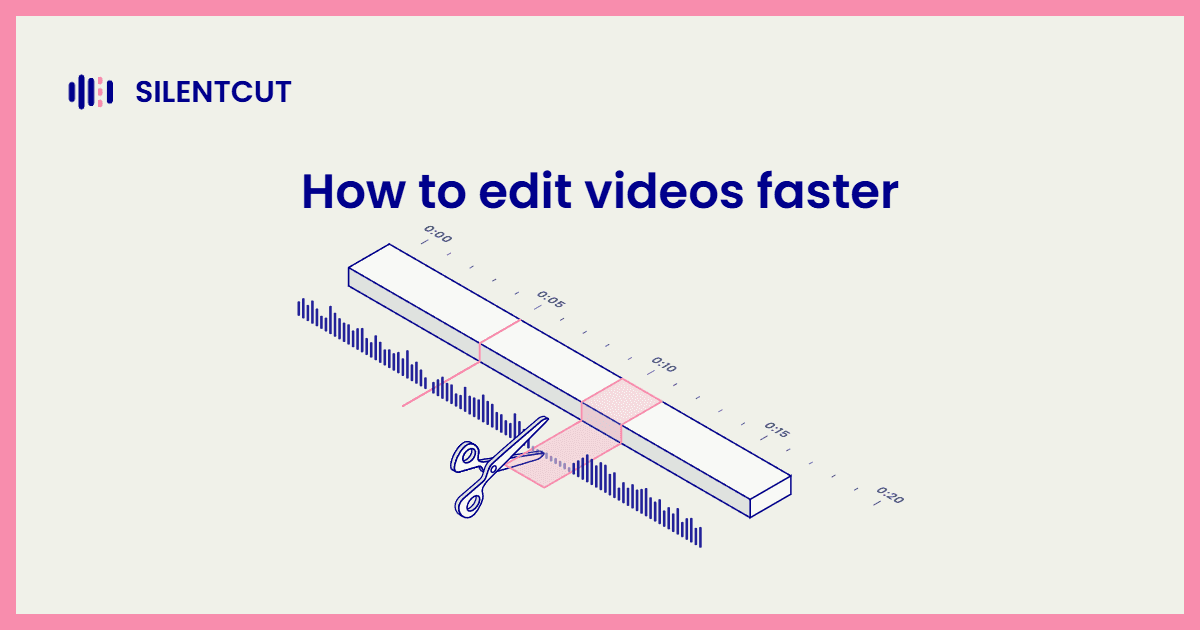
The silence pass runs second for a reason. Cutting filler leaves fresh gaps behind, and one sweep catches them all.
Silence Remover finds every gap with the sensitivity and minimum gap length under your control, so a beat you left on purpose survives while the dead air goes. That's SilentCut, and these two steps are exactly the hours it gives back. SilentCut isn't public yet. The mechanical front half of the pipeline is where the time goes, and it's the half that never needed you. Fewer hours per edit, better edits, more edits shipped.
Add captions
Captions come right after the cut locks, and never before.
Caption a raw cut and the captions faithfully transcribe every um you were about to delete. Caption the tightened cut and the auto captions come back clean the first time, style them once as a track and move on. Everyone watches on mute until you give them a reason not to, so this step stopped being optional years ago.
Add text and the little graphics
Text and graphics are emphasis, and emphasis is fast when the cut underneath is final.
Keyword pop-ups, lower thirds, an arrow when something needs pointing at. The speed move is building them once, as presets and templates, then placing instances per video. On a locked cut that's minutes of work. On a cut that's still moving, every ripple edit drags your carefully timed text out of sync and you place it all again.
Finish with sound design
Sound design goes last, on a cut that will never move again.
Music bed, sound effects, levels. Done last, it happens once. Done early, every edit after it dominoes through your keyframes and markers. Free libraries like Freesound cover the small hits and whooshes, and the mix pass at the end is short because the cut underneath already has its rhythm from the silence pass.
What makes every step faster
Two force multipliers sit under the whole pipeline, the keyboard and a timeline that plays back smoothly.
J, K and L drive playback in every serious editor, and the trim and ripple-delete shortcuts keep your hand off the mouse through steps two to six. And a stuttering timeline taxes every single step, so the lagging timeline checklist pays for itself across one edit. Fast editing is a workflow property, not a talent. Same pipeline, every video, and the speed compounds.