Dead Air Ratio (DAR) is the percentage of a video's runtime that is silence. A ten-minute raw recording with two and a half minutes of pauses, gaps and thinking time has a DAR of 25%. It's the number that makes the least visible editing work visible, because dead air doesn't announce itself the way a bad take does. It just quietly makes videos longer, slower, and harder to watch. To be clear on the words, this is video editing's dead air, the silent stretches in a recording, not anything to do with firearm suppressors that share the name.
That bar is one recording. Navy is speech, pink is dead air, and the chip is the whole metric. Every raw talking video has a bar like this, and almost everyone underestimates their pink until they measure it.
Why Dead Air Ratio matters
DAR matters because silence is the cheapest length a video carries. Viewers don't consciously notice dead air, they notice that a video feels slow, and retention graphs sag where nothing is happening. For editors, DAR is also a workload number. Every point of it is footage you'll scrub through, judge and cut by hand, which is why raw DAR maps almost directly onto cleanup time. Know the number and you know what the edit will cost before you start.
What a good DAR looks like
There's no universal target, because formats carry silence differently. A cinematic piece breathes on purpose. A talking-head tutorial or a podcast clip mostly shouldn't, since every silent second there is usually a pause the speaker didn't mean to publish. The useful comparison isn't against other channels, it's against your own edited output. The gap between your raw DAR and your published DAR is the cleanup pass, measured.
How to lower your Dead Air Ratio
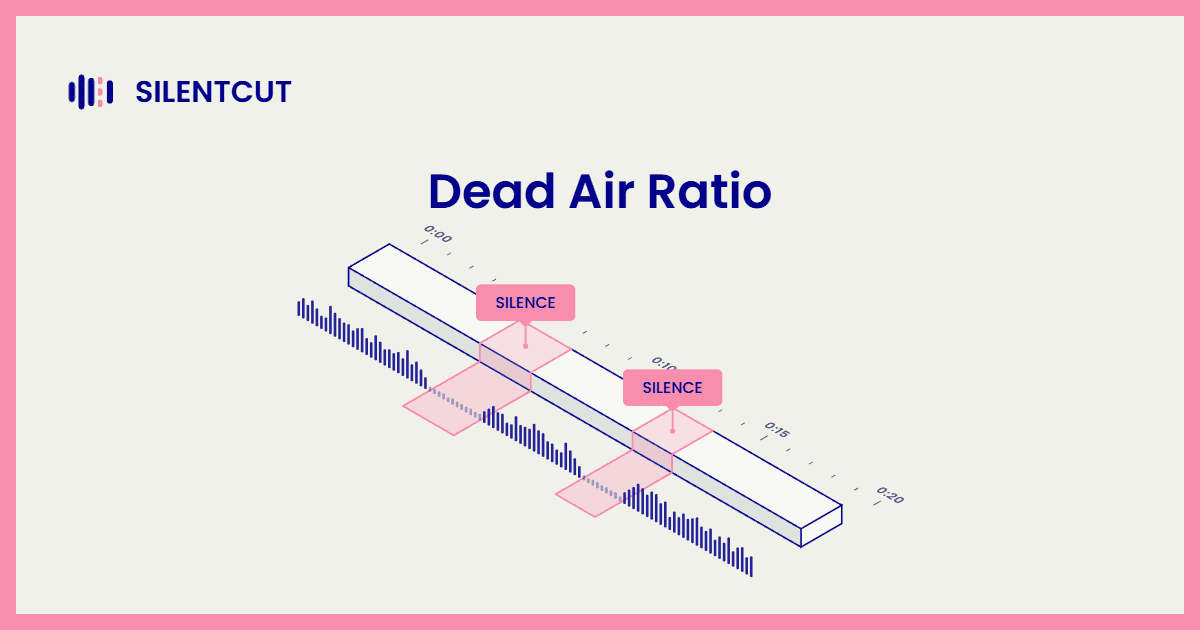
Lowering DAR is exactly what dead air removal tools automate, and it's the first thing SilentCut does. Silence Remover detects the silent stretches and cuts them, with the sensitivity and minimum gap under your control, and SilentCut shows your DAR so the number drops where you can see it. The scene below is a timeline with its dead air found and labeled, which is the moment DAR gets measured.
The same pass runs in the browser with SilentCut Studio, or lands directly on your timeline through SilentCut for Premiere Pro and SilentCut for DaVinci Resolve. Faster cleanup means more videos shipped, and shipped videos are what a channel and a client list are built from. SilentCut isn't public yet, and DAR is the number it exists to shrink.